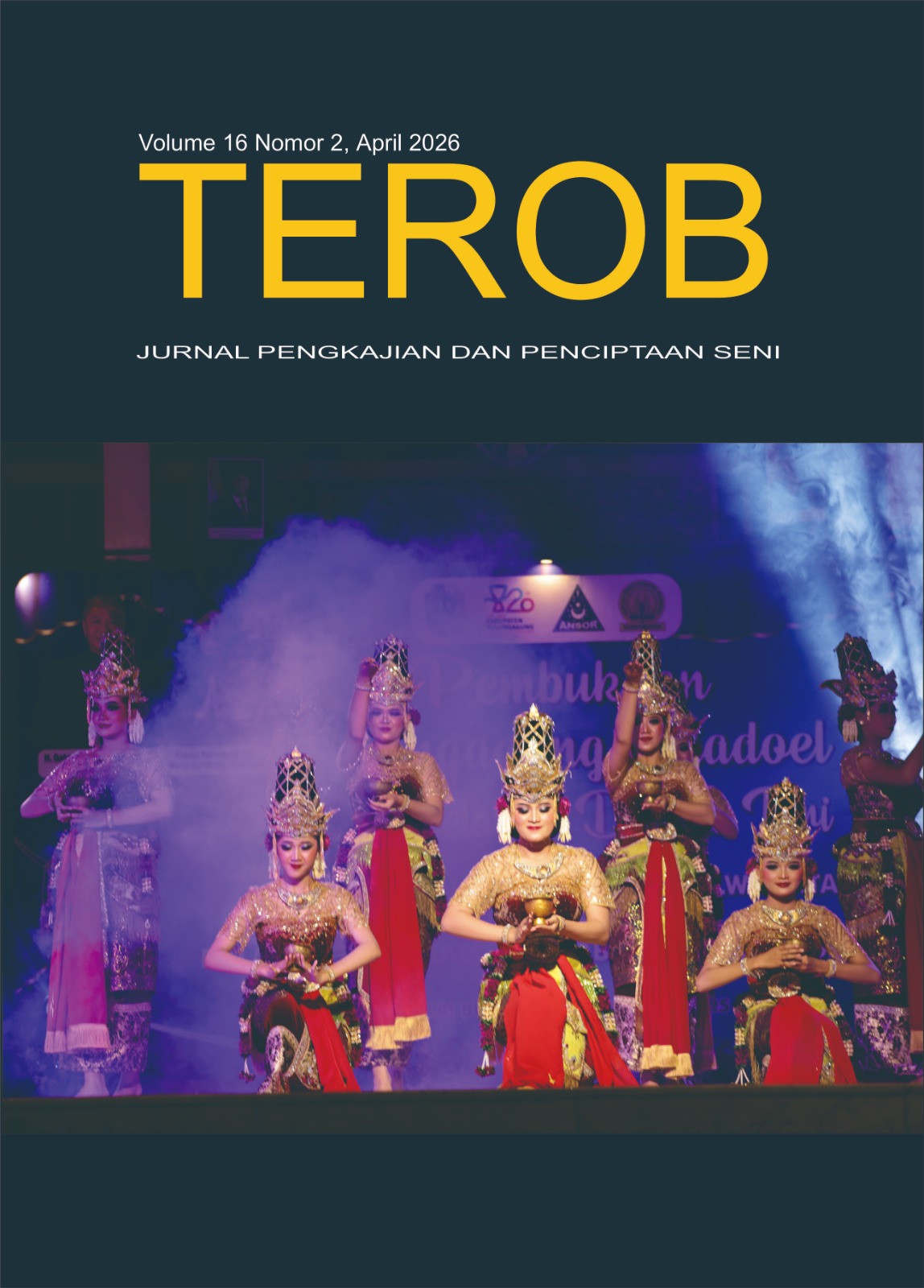
The Shape Of The Packaging Of The Ciprak Jemparing Dance Performance In The Arak Tumpeng Of Pakel Village, Jombang Regency
DOI:
https://doi.org/10.20111/terob.v16i2.123Keywords:
Packaging form, ciprak jemparing dance, arak tumpeng, creation process, Cultural DesignAbstract
This study aims to analyze the process of creation and packaging of the Ciprak Jemparing Dance (TCJ) performance) in the annual ritual of Arak Tumpeng Ponco Thuk (ATPT) in Pakel Village, Jombang. This topic is important because TCJ is a contemporary performing arts intervention that is integrated as a structural element in local design. The main research questions are: How did the process of creating TCJ take place, and how is the form of the performance packaging manifested in the series of ATPT rituals? The qualitative approach is used with an analytical descriptive method. The main participants in this study include Dance Creators, dancers, and village officials related to the implementation of ATPT. Data were collected through engaged and uninvolved observations, interviews, and literature studies. Data analysis was carried out by referring to the conceptual framework of Alma M. Hawkins' dance creation concept (Exploration, Improvisation, Formation) and the concept of Kaunang and Sumilat packaging forms. The results of the study show that the process of creating TCJ involves the transformation of the local historical transformation of Jemparing Hamlet, which is believed to be the training location of Majapahit soldiers, into a form of Surakarta style warrior dance that is adapted to the agile and dynamic Jombangan style. In conclusion, the form of TCJ packaging in ATPT is a construction of totality that succeeds in marrying the tradition of Surakarta with the locality of Jombangan, serving as an affirmation of the new cultural identity of Pakel Village.
References
Andini, B. O. (2015). Barongsai Cap Go Meh Di Makassar Sebuah Pemikiran Tentang Tari, Ritual, dan Identitas. Jurnal Kajian Seni, 2(1), 12–26.
Hendryadi, H., Tricahyadinata, I., & Zannati, R. (2019). Metode Penelitian: Pedoman Penelitian Bisnis dan Akademik. Jakarta: LPMP Imperium.
Jazuli, M., Slamet, M. D., & Paranti, L. (2020). Bentuk dan gaya kesenian barongan Blora. Dewa Ruci: Jurnal Pengkajian Dan Penciptaan Seni, 15(1), 12–19.
Kaunang, I. R. B., & Sumilat, M. (2015). Kemasan Tari Maengket Dalam Menunjang Industri Kreatif Minahasa Sulawesi Utara Di Era Globalisasi. Jurnal LPPM Bidang EkoSosBudKum, 2(1), 89–106.
Van Zanten, W. (2012). Social qualities of time and space created in performing arts of West Java; The implications for safeguarding living culture. Wacana, Journal of the Humanities of Indonesia, 14(1), 8.
Wibowo, A. K. (2022). Estetika Garap Tubuh dan Properti dalam Karya Tari Gandhewa Raga. Acintya, 14(2), 205–211.
Downloads
Published
How to Cite
Issue
Section
License
Copyright (c) 2026 Marshelina aulia, Renaldi Lestianto Utomo Putro, Nandhang Wisnu Pamenang

This work is licensed under a Creative Commons Attribution-ShareAlike 4.0 International License.